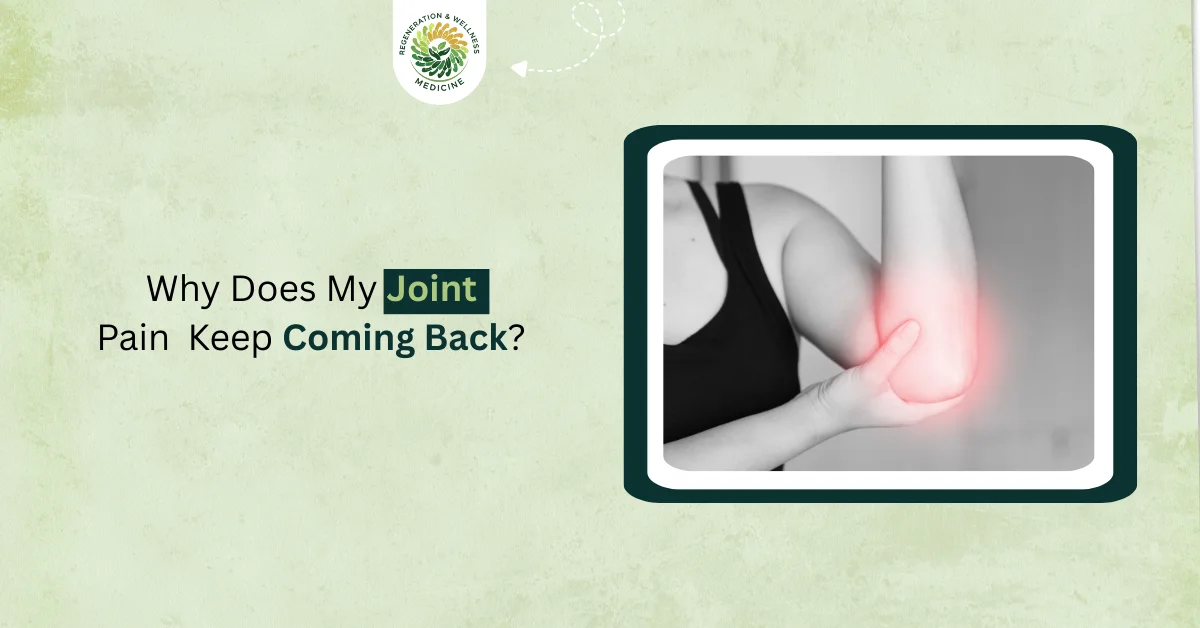
Pain in joints may be demoralizing and puzzling. You may rest. You may take medicine. You might take a reprieve. Then the pain recurs and most of them ask themselves, “Why do my joints hurt all the time?”
Many people ask the same question: Why does my joint pain keep coming back?
At Regeneration & Wellness Medicine, our Pain Management Services focus on identifying the root cause of pain rather than just masking symptoms. Long-term relief starts with understanding why the pain cycle continues.
Let’s look deeper.
Understanding Joint Pain
Joint pain happens when there is inflammation, injury, or wear and tear inside a joint. Joints connect your bones. They help you move, bend, and walk. When something goes wrong inside them, pain begins.
Pain may go away for a while because:
- Swelling goes down
- You rest the joint
- You take medication
- You avoid movement
But if the underlying issue remains, the pain will likely return.
Below are the most common reasons joint pain keeps coming back.
Common Causes of Joint Pain Keep Coming Back
Joint pain can come back for many reasons. Sometimes the pain goes away for a short time. But the real problem remains.
Here are some causes of sudden joint pain.
1. Untreated Inflammation
Inflammation is one of the biggest reasons pain returns. within the joint may ultimately destroy tissues. When the only thing done is to reduce inflammation, but not fully control it, it may erupt again.
This is common in:
- Arthritis
- Autoimmune conditions
- Old injuries
When inflammation keeps coming back, the joint never fully heals.
2. Overuse of the Joint
Many people return to daily activities too quickly. Repeated motion can stress the joint repeatedly. You will experience joint hurt after exercise or after working long hours.
Common examples include:
- Standing for long hours
- Heavy lifting
- Sports injuries
- Repetitive bending
If the joint does not have enough time to recover, pain returns
3. Weight and Pressure
Extra body weight puts pressure on the joints, primarily the knees and hips. Increased pressure implies increased stress. Over time, pain can return.
4. Weak Muscles Around the Joint
Muscles support joints. In case of unhealthy muscles, the joint absorbs additional pressure. Without proper support, the joint is irritated once again.
5. Cartilage Damage
The smooth tissue that covers the bones is called cartilage. When cartilage is worn, bone-on-bone rubbing occurs. The result of this is stiffness and pain. Cartilage is not an easy area to heal.
Unless this type of joint damage is dealt with appropriately, pain will tend to recur more frequently with time.
6. Old injuries
An old injury may never fully heal. Scar tissue or minor damage can cause pain to return over time.
7. Other health problems
Joint pain may be aggravated or recur due to some diseases, such as diabetes or gout.
8. Chronic Infections
Certain long-term infections can affect the joints.
Examples include:
- Lyme disease
- Chronic mold exposure
These infections can trigger inflammation throughout the body. In some cases, joint pain becomes one of the main symptoms.
If the infection is not identified and treated properly, pain may continue to cycle.
9. Environmental Toxin Exposure
Toxins in the environment may increase inflammation in the body. Exposure can come from:
- Mold
- Heavy metals
- Polluted air
- Certain chemicals
Toxins can stress the immune system and increase joint sensitivity. Over time, this may lead to repeated flare-ups.
Why Quick Fixes Do Not Work Long Term
Many people rely on:
- Pain pills
- Ice packs
- Rest
- Temporary injections
These methods can help reduce symptoms. But they often do not correct the deeper issue.
If the root cause is not treated, pain will continue to cycle.
Understanding the Joint Pain Cycle
Recurring joint pain often follows this pattern:
- Pain begins
- Temporary relief occurs
- Normal activity resumes
- Pain returns
Breaking this cycle requires more than symptom management. It requires a comprehensive evaluation and targeted treatment strategy.
How Regeneration & Wellness Medicine Breaks the Cycle
At Regeneration & Wellness Medicine, we take a comprehensive approach to Pain Management Services.
We begin with a detailed evaluation that may include:
- Assessment of joint movement
- Muscle strength testing
- Review of prior injuries
- Functional analysis
Based on your individual condition, we design a personalized treatment plan focused on:
- Reducing inflammation at its source
- Restoring joint stability
- Improving muscle support
- Enhancing mobility and function
- Supporting tissue healing
Our goal is not temporary relief. Our goal is long-term joint health and improved quality of life.
We restore proper movement and strengthen supportive structures. This helps reduce stress on the joint and lowers the risk of recurring pain.
Signs Your Joint Pain Needs Professional Care
You should seek medical attention if:
- Pain does not end in a few weeks
- Swelling keeps returning
- The joint feels unstable
- You hear grinding sounds
- Stiffness limits your movement
- Pain wakes you at night
Final Thoughts
If your joint pain keeps coming back, your body is sending a message.
The presence of recurrent pain should not be overlooked. It is frequently an indicator of further inflammation, instability, or joint damage that should be considered.
You do not need to live a life full of outbursts and temporary relief.
If joint pain continues to interfere with your daily life, contact the medical team at Regeneration & Wellness Medicine.
Our Pain Management Services are designed to address the root cause and help you move toward lasting comfort and restored mobility.
FAQs
Can joint pain go away permanently?
Long-term relief and improved joint health are possible when the underlying cause is diagnosed correctly and treated rather than temporarily masked.
When should I see a pain specialist?
If pain persists for several weeks, worsens over time or limits your mobility, it is time to seek professional care.
No comment