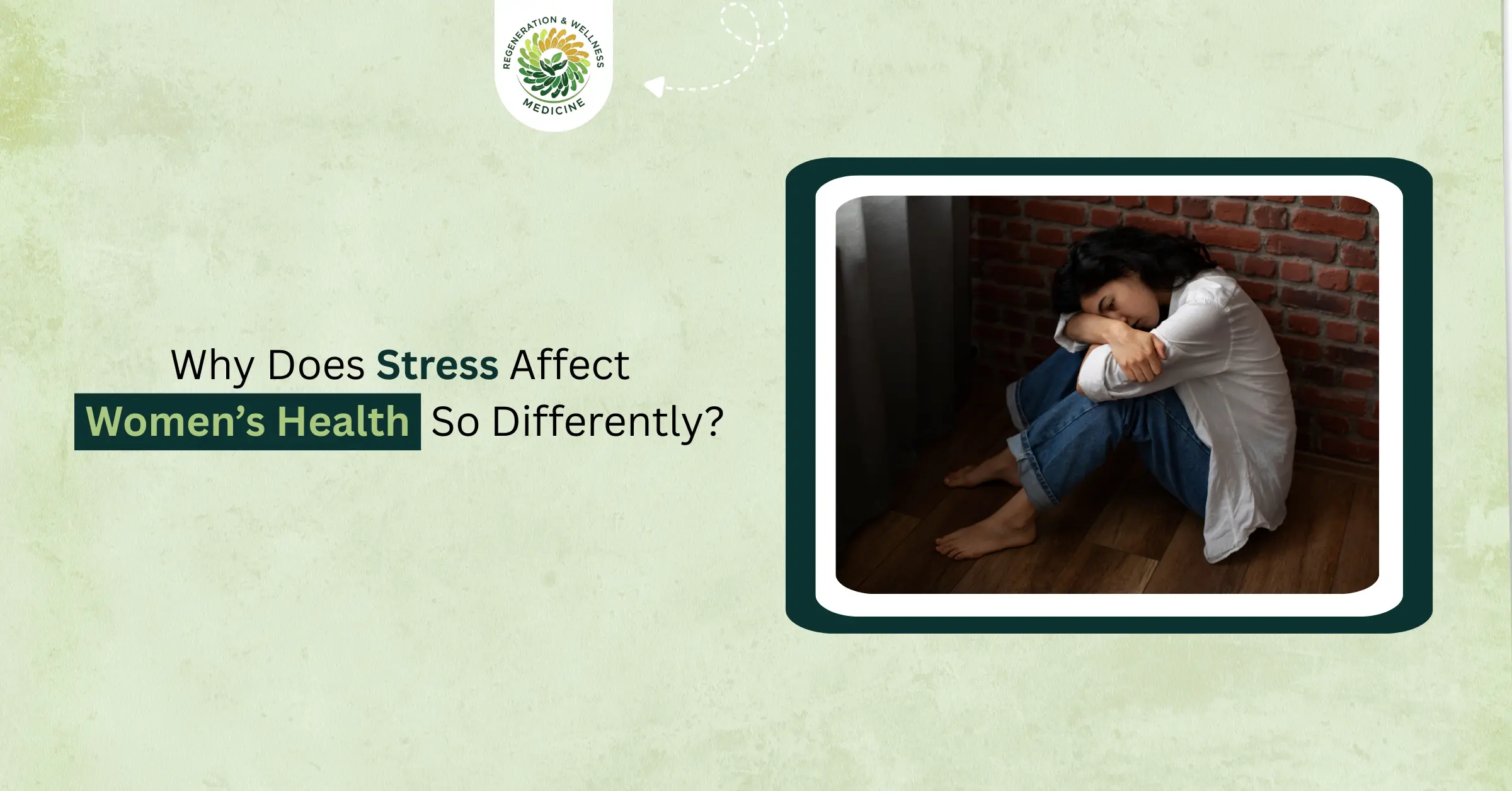
Stress is part of life. It can come from school, work, family problems, or money worries. Everyone feels stress, but it does not affect everyone the same way. Women’s bodies and emotions often react to stress in special ways.
At Regeneration & Wellness Medicine, we provide personalized care for women’s health, addressing hormonal and emotional changes.
Below, we will explain how stress affects women’s health, why it happens differently and what steps can help women feel better.
What Is Stress and How Does It Work?
Stress is the body’s reaction to problems. In case we are in danger, the body secretes hormones such as cortisol to make us respond quickly.
In the short term, stress may be useful, e.g., during an emergency. But the problem with long-term stress is that it is not good. It may influence our physical condition, emotions and energy levels.
Why Does Stress Affect Women Differently?
Women’s bodies work in unique ways. Most of the functions are regulated by hormones such as estrogen and progesterone. These hormones vary during menstruation period, pregnancy and menopause.
Stress can disturb these hormonal changes. It can make symptoms worse and create health problems.
For example:
- Stress may change the menstrual cycle
- It can cause mood swings
- It may reduce energy
- It can affect sleep
- It may increase anxiety
Women have emotional and social burdens. Many women balance work, family and personal life. This pressure can increase stress and affect emotional well-being.
At Regeneration & Wellness Medicine, we focus on understanding unique needs and restoring hormonal balance to support emotional health.
How Stress Affects Women’s Emotional Well-Being
Emotional health is an important part of women’s overall wellness. The feelings can be so heavy and difficult to manage due to stress.
When stress is too excessive, a woman’s emotional breakdown is possible. Signs may include:
- Feeling sad for long periods
- Losing interest in daily activities
- Crying without clear reasons
- Feeling overwhelmed
- Difficulty making decisions
These symptoms aren’t a weakness. They show that the body and mind need care.
Women facing emotional stress should get help. Speaking with a healthcare provider can make a big difference.
Signs of Mental Illness in Females
Mental health problems are common and treatable. Stress can raise the risk of mental health problems.
Some signs of mental illness in females include:
- Constant sadness
- Anxiety or worry
- Trouble sleeping
- Loss of energy
- Difficulty concentrating
- Changes in eating habits
Mental issues should not be overlooked. Early intervention may enhance well-being and deterioration of problems.
At Regeneration & Wellness Medicine, we offer care that supports women’s mental and physical health.
Can Stress Affect Menstruation?
Yes, stress can affect the menstrual cycle. Hormones control the menstrual cycle and stress can disturb these hormones.
Common effects include:
- Irregular periods
- Delayed periods
- Heavier or lighter bleeding
- Periods that come early
When stress changes hormones, the menstrual cycle may become unpredictable.
Can Stress Make Your Period Heavier?
Stress can sometimes make periods heavier. This happens because hormonal changes affect the lining of the uterus.
A heavier period may include:
- More bleeding than usual
- Longer duration
- Increased cramps
If periods become very heavy or painful, medical advice is important. Treatment can help restore hormonal balance and improve menstrual health.
At Regeneration & Wellness Medicine, we provide hormonal support and evidence-based therapies to help women manage menstrual problems.
What Causes Period to Come Early?
An early period can happen for many reasons. Stress is one of them.
Other causes include:
- Hormonal changes
- Weight loss
- Illness
- Changes in routine
Stress affects hormones and hormones control the menstrual cycle. When hormones change, periods may come earlier than expected.
Understanding these changes helps women take better care of their health.
Can Stress Cause a Stroke in Women?
Stress can increase the risk of serious health problems, including stroke.
Long-term stress may raise blood pressure. High blood pressure is a major risk factor for stroke.
Women should take stress seriously and seek ways to manage it.
Healthy lifestyle choices can reduce risks.
These include:
- Regular exercise
- Balanced diet
- Sleep
- Stress management
Medical support can also help prevent complications.
Why Women Need Special Health Care
Women’s bodies are unique. Health needs change over time.
At Regeneration & Wellness Medicine, personalized care is provided. Each woman gets treatment that fits her needs.
Care may include:
- Hormonal support
- Nutrition therapy
- Metabolic health support
- Lifestyle guidance
Every treatment plan is made for the individual. We address root causes, not just symptoms. This approach helps women feel stronger and more balanced.
Women’s health is about more than treating problems. It is about supporting long term wellness.
Final Thoughts
Stress affects women in many special ways. Hormones, life roles, sleep and body change all matter. Simple steps can help a lot. If stress feels too big, get help that looks for the cause. With the right care, women can feel stronger and more in control of their health.
At Regeneration & Wellness Medicine, women’s health care focuses on balance and healing. Personalized treatments help women feel better and stronger.
If stress is affecting your health, reach out for help. Taking small steps today can lead to better health in the future.
FAQs
Does stress impact fertility?
High stress levels are linked to complications with ovulation, conception and pregnancy outcomes.
Is exercise good for stress?
Yes. Exercise releases chemicals that improve mood and reduce stress, and even a short walk helps.
No comment